Sunday, November 2, 2014

The Millenial Minimalist Lifestyle?


"Millennials have turned against both cars and houses in dramatic and historic fashion. Just as car sales have plummeted among their age cohort, the share of young people getting their first mortgage between 2009 and 2011 is half what it was just 10 years ago, according to a Federal Reserve study."

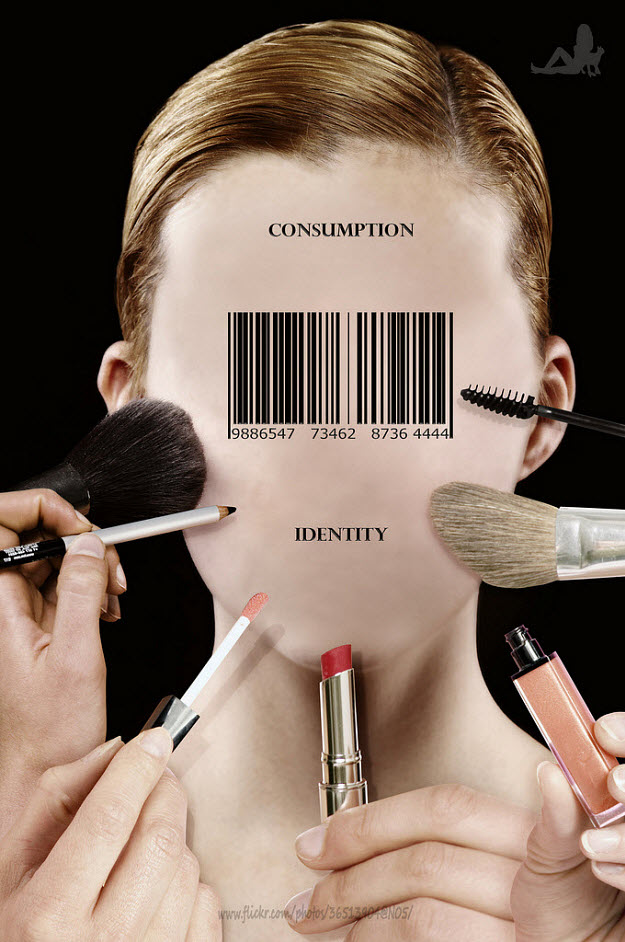
What the above is trying to say, translated by me in very plain English, you're being a bad citizen/consumer if you don't buy the big stuff. That's all you're really good for, since the economy is driven by money constantly circulating between hands, clean and dirty hands, whether its responsible spending or irresponsible (through debt).


I'll explain why being minimalist actually gives you some security, since its been drilled in our heads that more stuff equals more security.

First, Minimalism

Well, minimalism can be defined by less clutter, less stuff to occupy your time with and to work for. Really, less stuff to worry about. Sparseness and simplicity are other good synonyms for it too.
  • Basically, buying stuff you're going to use.
  • Not bitching about the stuff being too expensive and having to work extra hours of work for it. It's your money (and stuff) or your life, choose one.

It does have an economic aspect to it, but this is important to its success.

A factor that indicates a healthy economy is purchasing 'big-ticket' items, like cars and houses, because it leads to the purchase of other consumer goods and little consumer children in young and growing families.

Because there is still a lot of people struggling to buy those cars and houses, some have chosen to forgo these purchases for other alternatives that don't include running around constantly trying to catch up with all the debt you take on to eventually own the things you work for on a daily basis, sometimes without breaks. Having many things to pay for brings insecurity and worry in peoples' lives.

Technology has brought us so many alternative ways to live our lives, lives more fitting to our personalities.

Anyway, because there are a shortage of jobs that expediently  provide for the house and the car, people take out debt to purchase houses and cars and the other consumer goods that follow. Millennials are already in enough debt because of college, why would they tack on more?

Which leads to another question, why is our entire economy based on consumption? If you're trying to be responsible one day and not purchase anything, you've made your community businesses suffer, and the 'blame' is somehow on you.

THE MILLENIAL MINAMALIST LIFESTYLE, PART 2, COMING SOON....


Sunday, December 22, 2013

The Lonely American: The Way to Isolation


As I go to the store or a theme park or anywhere, we only talk to those we arrived with in a group.
Everyone's staring ahead.

Unconcerned by the many others surrounding them.

We have the closest replacement to any extension of new relationships; our electronics.

That keep us connected with the tenuous strings of wireless connection; effortless connection. Easy. Painless.
Too painless? Is this too careless? Or is communication to be muted and made harmless?

A fly away thing that doesn't require much substance, but a lot more of an instant gratification to interest our minds.

Let's throw weird stares at the strangers who try to talk to us, which is the only way to make it the norm.

Why the isolation of the rich array of human emotions? (e.g, teachers being afraid to hug their pupils, children not being able to do so in school either, etc.)

Has everyday convenience snuffed it out or made it awkward and insignificant, above the hurried tweets, instant messages, and self-explanatory icons?

It takes less effort to have only small doses of questionably meaningful discussion, so we can sacrifice everything to the behemoth that is modern-day living; the job and the shopping that the job's money entails, which the system wants us to do as much as we possibly can if not spend all our time on it, forgoing other meaningful pursuits and avenues of happiness. To finding balance.

But this is only what I observe: Am I wrong in my observations?

Like the picture above, are we glassed off to our fellow beings, afraid of being seen as weak and dependent enough to need steady and stable social interaction, an otherwise very normal thing.


Sunday, October 6, 2013

Slut-Shaming Defined


Those of us who criticize and admonish the behaviors of pop singers get quickly labeled as slut-shamers or people who are living in the past. Supposedly, we are the anti-feminists.

But daily we are seeing our pop singers and entertainers in general engage in behavior that society as a whole deems wrong, morally and illegally.

Behaviors that many of us ordinary folk would get locked up for when trying to get away with it.

Miley Cyrus's admission to doing drugs in her gyrating 'We can't stop' video, a singer who has many young and impressionable fans, still gets heralded as a figure of female empowerment and we the stuck-up, slut-shamers who live in the past.

At least when it comes to certain dangerous drugs can we draw the line on how far this 'empowerment' should reach?

'She risks it all by revealing herself, emotionally...and sometimes physically,' is the praise for Miley, and many other pop singers or entertainers, the like of Rihanna, Niki Minaj, etc.

Is acting out 'shockingly' (let's face it, it's not as shocking anymore after many young stars mature and start participating in what I see as the same reckless behavior) and getting semi-nude or fully nude, female empowerment?
Do men take women more seriously for their public nudeness, and the perverts and predators looking for it?

Maybe the definition of empowerment will shed a much critical light, as well as some context.

The definition of empowerment is this, no more or less:
  • give authority to somebody: to give somebody power or authority
  • make more confident or assertive: to give somebody a greater sense of confidence or self-esteem.

  • Was Miley, or Rihanna, or even Britney acting in 'a greater sense of confidence or self-esteem' when they each came out with their sexually-charged images after their American Sweetheart act was over?

    Britney suffered some issues after everything was said and done. It could be argued that Rihanna also suffered some issues.

    Did Miley act in a confident or assertive way, or did she just follow the crowd?

    Could peer pressure have also played a role in Miley Cyrus's decision to do an array of drugs, as it has in many teens and young adults lives? Or was she just so empowered in who she was and as a female who can do anything a guy can do, that she had always wanted to do drugs and be the 'bad girl' and now she's of an age that she can fulfill that fantasy of drug use and bad girl awesomeness?

    I don't think giving in to peer pressure, whether it be by friends or industry colleagues, is being confident and assertive in oneself or identity.

    You could say the same thing for Rihanna. Was showcasing her sexuality her full decision or was it somewhat influenced by those at her record label because it would be more profitable to sell a hyper-sexualized version of femaleness?

    No woman looks like BeyoncĂ© or Rihanna; some men and women agree to this because they exude an out-of-this world sexiness and beauty, but there's a reason for it: do regular women wear the same make-up and clothes (and air-brushing) these stars do?

    All stars are doing is selling an image, which should be enough to look at their actions with skepticism, not insults towards people like me for engaging in 'slut-shaming' or living in the past.

    Is selling sexuality, and not even a good kind of sexuality, female empowerment?

    Or is female empowerment being able to do whatever the f*ck you want without being influenced into doing it and truly being who you are, something a lot of people are afraid to be?

    Was Miley afraid that her pop country act wouldn't sell, essentially being afraid that people wouldn't like her?

    Female empowerment has a myriad of meanings, but it shouldn't replace decency or be mistaken for men-bashing, especially the men who are sometimes behind constructing female images for the masses to ogle at.

    Female empowerment shouldn't be giving men the fantasy they've always wanted: A completely sexually freaky chick who doesn't seem to realize the meaning behind her own crazy antics.

    Is a woman her face and body only?

    Sunday, August 11, 2013

    Culture Can Be Bought and Most of the Time Is


    Culture.

    When you hear this word, you think of something sacred and unique to a specific people.

    Not so much.

    Like the title proclaims, culture is bought and in more ways than one.

    Nothing is sacred from a corporation trying to make a quick buck on it.

    Corporations have throughout history, with the help of advertisers or people willing to advocate their products and the ideals attached to them, changed culture to benefit themselves monetarily.

    The evidence is looking at the town you stay in; how many small town businesses are around you?

    Places that showcase some of the town's culture and history? They're sometimes referred to as the Mom and Pop stores and at times known for how well the owners know their customers, the town's history, and some keepsakes of the town it keeps in their stores.

    Does Multi-national McDonald's or Wal-mart share any of these traits?

    I mean, most, if not all, of Wal-Mart's products are produced in China, giving them a leg up on the thrift shop down the street that will eventually close in a few weeks.

    It's not just discount shopping, you can see it in how products influence people.

    In America, you are what you buy; it's as simple as that, and what you own gauges your importance on a scale.
    So, we can infer that there is a business of buying culture. You can't really buy a product and then suddenly be a cultured, well-respected individual, but in America, you get pretty close to it when you buy something.

    If I were to have a cheap phone that only called and texted right beside someone who had an android or windows phone that did a million or more things, they would feel superior to me in how they kept up with the latest things in our consumer culture and maybe how technological savvy they are compared to me although they might not know how to navigate the whole phone; others would feel like they were superior too (this is kind of an extreme example, but it fits a purpose).

    Instead of gauging how important or cultured, or smart someone is through what they buy, why not talk to them and judge from their words and how well they speak. After all, that is the best way.

    A product is really a hollow object, sometimes with no real value depending on how cheaply it was made.

    Even if it was a luxury good that rightfully cost a lot of money, like a sports car, is the person who owns the car really all that cool and suave? It could be an elderly guy behind the wheel who usually stays in his house other than those cool drives in the sports car. Is that cool and suave?

    Consumer culture subverts the true meaning of things. It's almost always an illusion.

    What is American Culture? It seems to steadily be morphing into consumer culture or pop culture, even though pop culture (knowledge of what is trending with our tastes in music and clothes) circles around consumer culture (think of how many celebrities promote products to their kid fans and kids buy them because it will make them as cool as Justin Bieber or someone). How do you feel about corporations defining what is to be appreciated in culture, like cool clothes, cool this and that, because only cool people are popular.

    I thought America was once a land about what you did for a living and how that profession helped people; now you simply get the job to buy the life-defining things.


    How Today's Whack Rappers (and 'Artists') Succeed in the Mainstream


    Do you know how you can succeed in the mainstream music industry today and horribly suck?

    Fail.

    But, you have to do so successfully.

    How do you do that, you say? It's a little thing called Failing Successfully.

    I underlined it because I made it a term.

    A lot of artists are doing it, they just haven't put a name to it.

    I mean, people know it by regularly assessing that you need no real talent whatsoever to be a singer or rapper, or anything to do with the entertainment business; except maybe modeling since you do need certain assets.

    This comes from a pretty simple process: lower peoples' expectations enough on a gradual basis and soon you can flood the radio with garbage, something that record companies are really taking advantage of because it costs very little the more you can produce a cheap beat and put a crappy or semi-decent voice (doesn't matter) through auto-tune. That dreaded short cut to perfect, almost robotic voices that haven't the slightest human distinction to them.

    And that's what record companies do: Get someone to write a catchy beat and hook, no matter how annoying, especially if its one of those dance songs, and you're in business.

    Also, it would work better if the person behind the songs are physically appealing and who have this magnetism about them  because of their wacky personalities or willingness to take risks (But its kind of their jobs to take risks to attract attention, for example crazy outfits or filter-less conversations for shock value) and have them on the tracks described above.

    There are many examples, but I won't point out any lest you guys come at me with pitchforks over your favorite celebs.

    I just wish music wasn't on a continuous loop of the same thing: boys, parties, women.
    This music is good once in a while, but not all the time.
    I want to hear some instruments, deep emotions about other sides of life than love (more like lust) and partying.

    Show business is show business- a flawed illusion of perfection.

    PART 2 COMING SOON


    Saturday, August 10, 2013

    My High-Fructose Corn Syrup Experiment


    Hey, guys.

    Just wanted to tell you of a sort of experiment I've been doing for a couple of weeks now, and I had some interesting results from it, though its an experiment I've done off and on again for a maybe a few months to a year now if I take into consideration the times in my life I've consumed a moderate portion of high-fructose corn syrup or when I didn't have much of the substance in my diet.

    It's not too accurate and scientific, but mostly how its effected me and how it might effect you.

    Anyway, I am a person who doesn't eat a lot of sweets, now more than ever.

    My teeth always hurts after eating sweets or they're just too sugary to eat without my mouth and stomach feeling poisoned by a sweet death, so I don't come across high concentrations of corn syrup if I can help it, although its in a lot of food these days.

    Look at two different labels for two different products and it is most likely contained in both, like for a example a can of chicken noodle soup and a jar of Grape Jelly/Pepsi soda (two things that I've actually witnessed).

    But I used to eat a lot more sweets as a teenager than I do now, which wasn't all that long ago.

    I weighed about 145-147 pounds then.

    As I got older and start learning more about food and healthier choices, I cut back a lot on sugary drinks and the few candies and sweets that I ate (gummy worms, oreos, pop tarts, etc.).

    I am 138 pounds last I checked, and this is with no difference in exercise since I still do the same thing I did in the past; walking and running with my dog and walking to nearby places or some with a little distance instead of using my car.

    I actually ate a few sugary snacks today just to see how it would taste to me, the high-fructose syrup pretty prevalent in it evidenced by the label containing corn syrup and high-fructose corn syrup on the same line, and it was disgusting.

    I didn't know how it truly tasted until I took a break from it and tried it again; It was only 2 cookies and a Hawaiian punch drink.

    It was awful; the taste was so bland except for a slight sweetness and tang that seemed completely weighed down by the thick juice.

    Crazy, huh?


    Friday, August 9, 2013

    The Rantings of a Broke College Kid & Some College Myths


    It saddens me to say this about my elders, but those in the older generation don't know what they're talking about when they say young college kids completely lack motivation.

    I am so tired of hearing it that I dedicate this rant to them (not all) and any other individual who believes the following myths....

    "Well, if you get a part-time job, you won't have to take out so many loans."

    Or..."you studied in debt with that useless major."

    Let's examine these common reprimands of the youth.


    Myth 1-
    "Well, if you get a part-time job, you won't have to take out so many loans" excuse.

    A part-time job is NOT going to be very helpful in paying for college.

    That 7 or 8 dollars an hour can probably pay for a few cheap books, but that's it.

    (It's even harder to get a job with the whole 'un-paid internship' mentality dominating campuses so that you can forfeit that part-time job money for even more valuable experience later down the line with the internship..).

    There is no wonder students have to take out so many loans with tuition rates steadily increasing as financial aid is provided to more and more students, though in amounts that don't keep up with inflation and tuition and the school feels the need to hike up cause the access students have to it...arrrgh! The complicated process is hard to explain to say the least. Why not uncomplicate it?

    Myth 2- "You studied in debt with that useless major" and therefore deserve what you get.

    Then stop telling students and even kids that that they CAN BE WHATEVER THEY WANT. Or my favorite, AS LONG AS YOU GO TO COLLEGE, EVERYTHING WILL WORK ITSELF OUT AT THE END.

    If you really think about it, not everyone can be an engineer, a nurse, doctor, or lawyer; the coveted and most desirable degrees that supposedly guarantee you a job after graduation.

    Notice that it's not many professions up there.

    With many different degrees, there can be more diversity in the labor market; a robust economy with many new ideas on how to do a variety of things.

    I understand that some degrees are hard to apply to the real world, but I believe if someone has a plan with that useless degree, they can interpret it pretty successfully themselves.

    Not everyone has to get a degree that an employer will want. We need more people going into business for themselves, which is another rant for another day on why its unnecessarily difficult to start a business today; But I will say this- Anyone who wants to start a business that is cost-effective, the internet would be a good start.

    Anyway, back to the topic at hand.

    I'm tired of older people saying we're lazy and that's why some of us don't even make it to graduation.

    It's the system. Blame the difficult system we are now living in.

    If there were more students who didn't have to worry about their finances while going to college, they would be free to take as many classes as they want instead of only taking 2 or three to save money and also have time for a part-time job so they don't have to take out so many loans for that semester. This is all evidenced by my peers and friends; my own experience.

    It's not fair that young people cannot enjoy themselves while they're studying something they love to do at college. And I don't mean the other myth that I always hear, the myth saying we party all time and go around sexing each other: This mainly applies to those who had an easy transition to college in the area of their finances and can afford to party all the time.

    I'm not saying that the system is all to blame. Sometimes there are students who slack, but that's only because so many students who aren't ready or don't particularly know what they're doing, are pushed into college by counselors and parents, not given any other options or choices like technical/trade schools or apprenticeships. Again, this has a little to do with the system we're surrounded around too.

    PART 2 COMING SOON